
Flamingos, pelicans and the Amvrakikos National Park
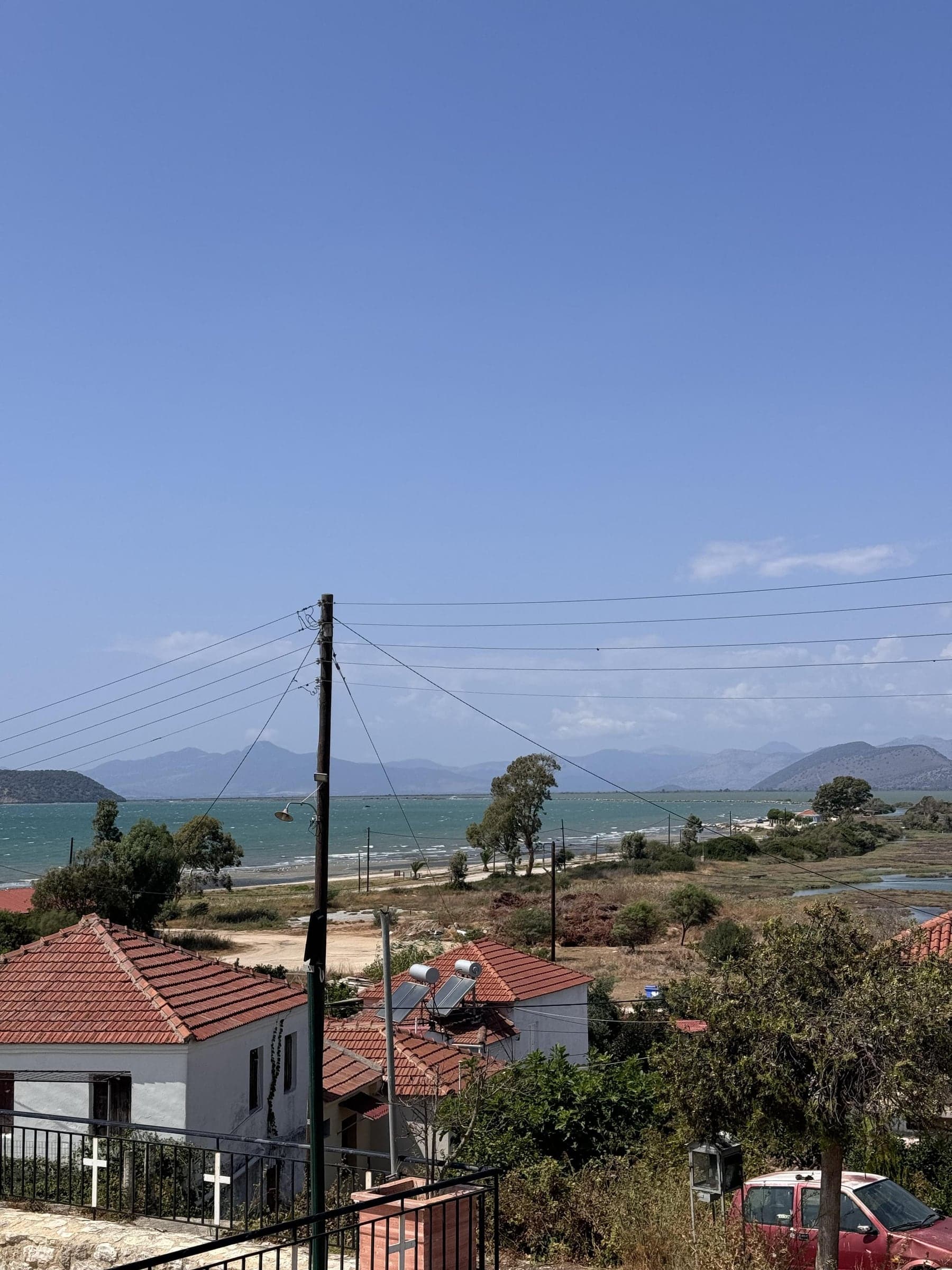
Koronisia sits inside the Amvrakikos Wetlands National Park, a Ramsar wetland of international importance with more than 270 recorded bird species. The best vantage point is the lagoon road itself, just before the village, early in the morning or late in the afternoon.
Most visitors come to Koronisia for the quiet and the fish, and discover the birds by accident — through the car window, on the drive across the lagoon. You do not need to be an ornithologist to work out that something unusual is happening here.
The Amvrakikos is one of the most important bird refuges in the Mediterranean, and Koronisia is literally inside it. Below: what you will see, where to stand, when to come, and how not to disturb any of it.
What the Amvrakikos National Park is
The Amvrakikos is an enclosed gulf fed by the Arachthos and Louros rivers, which together create a complex of lagoons, marshes and salt pans. That mix of fresh and salt water is what makes the area so productive — for fish, and therefore for birds.
The area is protected as a National Park and designated a wetland of international importance under the Ramsar Convention, as well as forming part of the Natura 2000 network. More than 270 bird species have been recorded within its boundaries.
Koronisia is not next to the park; it is in it. The road you arrived on crosses the very wetland you are watching.
What you will see
The basics do not require luck. On an ordinary drive across the lagoon, even without binoculars, you will see several of the following.
- Greater flamingo
- in flocks out on the shallows; most numerous outside the summer months
- Dalmatian pelican
- the Amvrakikos holds one of the largest populations in Greece — a globally threatened species
- Herons and little egrets
- a near-certain sighting year-round, along the lagoon margins
- Cormorants and pygmy cormorants
- perched on the posts and nets of the fish farms
- Avocets, black-winged stilts and waders
- on the salt pans and shallows, especially on spring and autumn passage
- Kingfishers and terns
- along the channels and creeks
The dolphins of the Amvrakikos
Less well known, but among the most remarkable things about the gulf: the Amvrakikos holds a resident population of bottlenose dolphins, effectively enclosed within it and among the most closely studied in the Mediterranean.
Seeing them from shore is not guaranteed, and nobody should promise otherwise. Your odds improve on a calm sea and further out from the shallow lagoon, towards the open water of the gulf.
Where and when to watch
You do not need a guide to start. You need the right hour and some patience.
- The lagoon road before the village is the best and easiest spot — pull over safely and stay in or beside the car.
- Early morning and the two hours before sunset are by far the best; midday light is harsh and activity drops.
- Autumn, winter and early spring bring the highest numbers and the most species. Summer has fewer birds and more heat.
- The shoreline beside the village and the ground around the monastery also give good views over the shallows.
- Binoculars change the experience entirely. For photography you want a telephoto — the birds are distant, and should stay that way.
How not to disturb anything
This is a protected area and, at the same time, a working environment for the village’s fishermen. Both deserve respect.
- Stay on roads and existing paths; do not push into the reeds or the shallows for a better shot.
- The fish farms and fishermen’s installations are private workplaces.
- Do not approach flocks that are feeding or resting — if they fly because of you, you were too close.
- For drones, check the current rules first: this is a protected area, and flying over a wetland disturbs birdlife severely.
- Take your rubbish with you; there is no infrastructure out in the middle of the lagoon.
Birdwatching — common questions
Are there flamingos in the Amvrakikos Gulf?
Yes. Greater flamingos are among the signature birds of the gulf and are seen in flocks out on the shallows, in the highest numbers outside the summer months.
Where can I see birds at Koronisia?
From the lagoon road just before the village, and from the shoreline beside the village. The best hours are early morning and the late afternoon before sunset.
How many bird species are there in the Amvrakikos?
More than 270 species have been recorded in the area, which places the Amvrakikos among the most important bird refuges in the Mediterranean.
Are there dolphins in the Amvrakikos Gulf?
Yes, the gulf holds a resident population of bottlenose dolphins. Sightings from shore are not guaranteed and are more likely on a calm sea.
What is the best season for birdwatching?
Autumn, winter and early spring, when numbers and species variety peak. Summer has noticeably fewer birds.
Continue the guide
- When to visit— Month by month: swimming, birds, quiet, and when the village fills up.
- Getting there and the map— Distances, the lagoon causeway, parking, and the bus and ferry questions answered.
- Swimming and beaches— What the gulf water is like, and which Ionian beaches are worth the drive.
- Back to the Koronisia guide